Tuesday, December 6, 2011

Just For Fun

Every now and then I like to get playful with the serious parts of life and laugh at myself, my foibles, my judgments, and my blind spots. And here comes Holly Housman Friedman’s very thoughtful article in the October 2011 issue of FOCUS, about Psychoanalysis—“On Becoming a Psychoanalyst.”  And I had just about given up on that form of treatment or personal exploration as being outdated, overpriced and inaccessible.  But Holly made it come alive when she said, “It liberates patients from neurotic patterns, helps them make better choices, addresses the blind spots and moves them to  live their lives to the fullest potential.” Who would argue with that?  So I am encouraging all readers to take another look at what I thought was an antiquated method of treatment or education.  Pull out your October 2011 issue of FOCUS and get a refreshed view of psychoanalysis.

I took my interest to the next level when I was in New York a couple of weeks ago and went to see the longest running off-Broadway Play- Freud’s Last Session.  This was a ‘fictionalized’ session between Freud and C.S. Lewis after the war when Freud had settled in England.  The two hammered out their different points of view about religion, life, government, tyranny and love.  The dialogue was tight, pithy and substantive.  After the play, I had my own session with Freud, as you can see.  Just for fun


Carol J. Trust

Thursday, November 10, 2011

Got Paid Sick Days?

I knew it was coming. The tickle in my throat that grew into a persistent cough. That one sneeze that turned into three in a row. The feeling of a warm cheek that soon pushed the thermometer up to 100 degrees. I knew that despite my efforts of taking Vitamin C and using hand sanitizer, I had the flu.
I knew it was going to get worse before it got better and I didn’t want to risk the staff getting sick so I called out sick for the day. I proceeded to stock up on tea, tissues, and most of all, sleep. I woke up the next day and felt much better.

The thought that I was going to lose my job or not afford to pay the rent because I lost a day’s wages didn’t cross my mind. Unfortunately, that scenario is out of reach for many Massachusetts workers. Over 1.4 million workers in Massachusetts lack a single guaranteed earned paid sick day. This means that there are thousands of workers who must choose between their jobs and their health. Even more Massachusetts workers—more than two thirds—cannot take any sick time to care for a sick child or elderly parent. These workers can lose pay or even their jobs if they stay home from work to get well, or to care for a sick child or relative.  They can lose pay just for going to a routine doctor’s appointment to stay healthy.

NASW-MA has prioritized House Bill H1398, An Act to Establishing Paid Sick Days, which would address this significant economic injustice and public health issue. Under this law:
  • Employees earn 1 hour of paid sick time for every 30 hours worked
  • Employees can earn up to seven paid sick days a year.
  • Earned paid sick time can be used for illness, routine medical appointments and domestic violence related.
  • Earned paid sick time can be used to meet the needs of the employee, or the employee’s spouse, child, parent or spouse’s parent.

There are many reasons why as social workers, we are advocating for this bill. HB 1398 would not only decrease the spread of illnesses but it also would ease the burden on families across the Commonwealth. Caretakers that are able to attend to their sick family members will strengthen families instead of adding the additional stress of losing a day’s wage or even their job.

Earned paid sick days also make economic sense. All health care payers will save when employees can take better care of themselves and their families, reducing their health care expenditures.  This preventive measure would support the efforts of cost containment in health care and boost employee productivity in the long run.

Passing this bill is a win for employees, employers, and families across Massachusetts. Help us tell the legislature that its time to pass HB 1398, An Act to Establish Paid Sick Days! I urge you to call your legislators and let them know that you want them to support HB 1398. The more legislators hear about the bill, the better chance it has of passing into law. Need to know who your legislator is? Go to www.wheredoivotema.com  to find out. You can also email your legislator directly from our website.

Carol J. Trust


Friday, November 4, 2011

Heros


In April, National NASW gave the award for Public Citizen of the Year to Clementine (Tina) Chery for her pioneering work with families impacted by violence, particularly family members of homicide victims.   This was the second NASW award Ms. Chery received.  Last year the MA Chapter awarded her for her extraordinary work through the Louis D. Brown Peace Institute, in Dorchester, MA.  Tina’s organization is unique.  It is run mainly by volunteers who work toward instilling the value of peace and raising awareness in young people of the consequences of violence on the individual, the family and the community.  Thanks to the dedicated work of the Institute, November 20th to December 20th has been designated as the 11th annual ‘Survivors of Homicide Victims Awareness Month’.  This yearly observance provides a platform where we can learn and teach others how to assist families who have lost loved ones to homicide.

Massachusetts was the first state in the country to dedicate an entire month to survivors of homicide victims.  We salute the work of the Louis D. Brown Peace Institute as we honor the courage, creativity and grace of its founder, Tina Chery.

To find out about the activities planned for this coming month go to www.ldbpeaceinstitute.org

Carol J. Trust

Friday, October 28, 2011

Grateful for good news!

I am so hungry for some good news to appear on the front pages of the two major newspapers in the Greater Boston area. Anything will do. Maybe the good news is being covered elsewhere; maybe I am reading the wrong newspapers? The other day when I had had enough I turned to read some of my emails and low and behold, there was the gold. It was from a social worker who was writing about an extraordinary experience she and her aging Dad had had with a local social worker whose unstoppable advocacy actions took her breath away.  Some of the names of the organizations and people in the following have been changed because I want to focus on the exceptionally powerful positive actions of one of our own rather than on what appears to be negative actions of the organizations in the story.  What follows is our front page story—a story of simple greatness, positive energy and superlative professional actions. Here is the email letter we received

‘Dear NASW,

I am writing to tell you about a clinical social worker, at UMASS Memorial University Campus in Worcester.  My father had a stroke in early July and was hospitalized at UMASS where he received excellent care by the stroke team.  He had ‘Company X’ insurance.

In mid- August, once my Dad’s medical condition had stabilized, the stroke team recommended moving him to an acute rehabilitation facility.  The team believed that acute rehab of 3-4 hours per day was the course of treatment to pursue for his best possible recovery.

The Clinical Social Worker was the case manager assigned to my Dad for discharge planning.  We discussed which acute rehab facility would be best and the social worker went to work preparing the necessary paperwork to get my Dad moved to the rehabilitation facility. 

Despite the stroke team's unanimous recommendation for acute rehab the insurer denied the transfer and proposed moving my Dad elsewhere.  The Clinical Social Worker asked if we wanted to appeal the insurer’s decision and we agreed emphatically.  She worked tirelessly to get the information needed to review the medical facts in my Dad’s case but to no avail. The insurer never even reviewed the medical record in this case.

I hired an attorney to work with us and with our Clinical Social Worker to get a reversal of the denial. After several phone calls and emails, late on a Friday afternoon, the insurer reversed the denial and my Dad was sent to the facility we had wanted to get the medical treatment he needed and the care his medical team prescribed.

I write this to let you and your organization know of the exemplary work that this individual did for my Dad and my family at a very stressful and critical juncture in his medical treatment.  This person is a tenacious advocate for her patients and a credit to your profession.  We were very lucky to have her working with us.’ The social worker is Heather Miller, LICSW.

Sincerely,
A grateful client’

Now, that is great news!

Carol Trust

Wednesday, October 12, 2011

Leading From Possibility


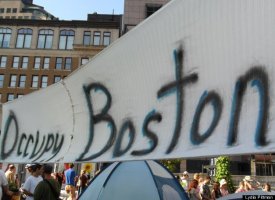
The ‘Occupy’ phenomenon is growing across the nation.  A few blocks from the Chapter office, Dewey Square is filled with individuals that are calling our attention to what they see as pervasive social and economic inequities that shame our wonderful country and state.  I want to share with you the statement that the MA Chapter has released on the ‘Occupy Boston’ event.  We are in support of the occupation as it retains its peaceful context.  Below is the Chapter’s statement.
NASW MA Chapter's Statement in Support of Occupy Wall Street and Occupy Boston
As an organization that is committed to social and economic justice and unimpeded access to services for all, NASW-MA Chapter supports the Occupy Wall Street and Occupy Boston protests. These protests are shining a light on the exacerbated income and social inequality that has gripped the nation in recent years. America’s “new economy” is a tale of skewed wealth and income. The new economy generates extraordinary riches for the few, but creates declining wages, rising debt, and the risk of deep and persistent poverty for many. 

Social Workers know that joblessness and economic insecurity contribute to the incidence of mental illness, family violence, suicide, substance abuse, crime, and diminished capacity for healthy family and community functioning. It is this knowledge and experience that gives the social work profession a special responsibility to advocate for income, employment, and social support policies that promote the economic justice and social well-being of all members of society and why NASW-MA Chapter has always been on the forefront of progressive taxation campaigns in the commonwealth. NASW-MA Chapter supports social, economic, and political actions to end poverty and the vast inequalities in wealth and income, to which protestors at “Occupy” events are so effectively drawing the country’s attention. 

NASW-MA Chapter urges its membership to raise awareness about and take part in the Occupy Boston peaceful protests, as social workers see fit.

 Betty Morningstar,PhD, LICSW, President, and
Carol J. Trust, LICSW, Executive Director

Monday, October 3, 2011

Leading From Possibility

CHILDREN’S MENTAL HEALTH


This morning I attended the monthly meeting of the Children’s Behavioral Health Initiative (CBHI) Advisory Council, with one of our MSW Interns from Salem State University.  This is the group that is advising the Department of Mental Health on the implementation plan of the Rosie D. case outcome. All the professional mental health societies and trade organizations as well specialty MD groups, advocacy groups and client consumer groups, Executive Office of Health and Human Service Agencies, hospitals serving children and others concerned with Mental Health Issues and services related to children.  It was a big group as it always is.  These are the folks who not only care about the mental health services provided to children, but are really focused on the barriers standing in the way of delivering these services. And there are many that seem to be unintentional- the consequence of addressing a complex set of issues, services and financial restraints.

As we started reviewing what are mission was, our accomplishments, our authority, our power (or lack of), we noted all the other initiatives that were occurring at the same time with similar missions:  There is: the CANS project that zeros in on providing ‘wrap around services’ for children; the Behavioral Health/Primary Care Integration Group, which is focuses on just what the title says; the state Mental Health Planning  Council which oversees mental health services to kids and adults; the Department of Child and Family Services Advisory Council, which focuses on the services provided to DCF families and Children; the group that; the Office of the Child Advocate; the group that is reviewing the Governor’s proposal to restructure the provision of state services to children;  and several others.

As we started listing all the groups, we saw that we really needed to get clear about our own focus and to coordinate these efforts of well informed, dedicated, and committed mental health individuals caring about the mental, social and educational health of our children. Our next meeting will focus on this question. As we go through this process, I remind myself that many good people care tremendously about providing services to our children and that there are many routes to follow-none are simple or clear cut, just like most of life.  We need to ‘be with’ the lack of clarity as we sort it all out. The ambiguity is clear.

Carol J. Trust

Thursday, September 15, 2011

Leading From Possibility

Ten Years Later

I had a hard time thinking about this topic.   It was so huge, so monstrous, so omnipresent, so incredible.  My usual responses and judgments just did not fit.  There was one memory, however, that totally stuck with me and I believe will stand out for me forever.  It had to do with one of our Board member’s response to the day.  Some background first.  The morning of September 11, 2001, was the day of the Chapter’s Annual Board of Directors retreat. 25 Board members and 4 social staff were around the conference table when the announcement of the attacks was made.

The able President and Executive Director at the time asked the group what it wanted to do about continuing with the meeting that had been planned for several months. At first the sentiment was that we should cancel the Retreat. 

Some members stood up immediately and said that they were leaving without any discussion.  The majority of participants chose to discuss, not only the attacks that had just happened, but to relate them to our lives as professional social workers, community members and family members.  Some people said they wanted to return to their offices to handle calls that would be getting from clients, employees or students.  Others felt they needed to get in touch with their family members and be with them.  Then one Board member stood up and declared that cancelling the meeting was just what the attackers wanted: to disrupt our lives (among other motives) and that if we stopped the meeting we would be doing exactly what the attackers were hoping to display—power over the enemy.  She shared with the group that during the blitz on London during World War II, all people were expected (and did) go about their normal business, whether it was in an office, an agency, a hospital or school.  The Londoners were determined not to give in to evil forces.  And she, Sophie Freud Lowenstein, who was living with her family at the time in London did exactly that.  She declared that we must continue our business.  And we did.

This was a lesson that has stuck with me to this day.  And I thank Sophie for the lesson in resilience that she graphically conveyed that morning.

Carol Trust